Translating a literary work is not about transferring words from one language to another. It’s about making impossible decisions, one after another, knowing that every choice saves something and sacrifices something else. The literary translator lives in this paradox: the more faithful to the original text, the less faithful to the experience it creates.
The wordplay problem: humor that doesn’t cross borders
J.K. Rowling named one of her darkest spells Avada Kedavra — a phonetic distortion of abracadabra, which itself comes from the Aramaic avra kadavra: “let what I say be destroyed.” The sound carries the magic. But what about Diagon Alley, the wizarding street whose name is a pun on diagonally? Portuguese translators went with Diagonal in Portugal and Beco Diagonal in Brazil — preserving the sound but losing the joke. Knockturn Alley, meanwhile, became Beco Corrediço in Brazil. None of these solutions is wrong. They are simply different kinds of loss.
The problem deepens with character names. Dumbledore means “bumblebee” in archaic English — a nod to the character’s habit of humming. Voldemort comes from French: vol de mort, “flight of death.” Details most readers will never know, regardless of which language they read in.
Don Quixote and the humor that ages
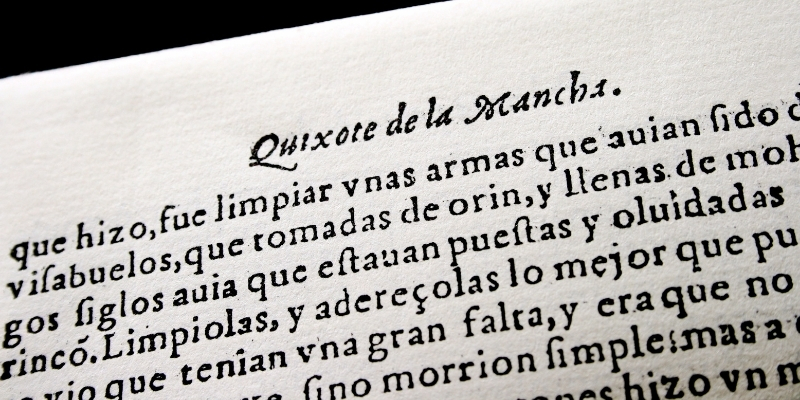
Cervantes wrote Don Quixote in 1605 with a deeply local sense of humor: parodies of chivalric romances that Spanish audiences knew by heart. For the contemporary reader — in any language — much of that humor has already arrived diluted. The translator then faces an additional layer of distance: not just cultural, but temporal.
The word hidalgo, for instance, carries a specific social weight rooted in 17th-century Spain. Translating it as “nobleman” is technically correct and culturally hollow. Keeping hidalgo in English demands a footnote — and footnotes are, by definition, an admission of defeat.
John Rutherford, one of the most celebrated English translators of the novel, once said that translating Cervantes is like trying to retell a joke you heard in another language: you know it was funny, but you can’t guarantee it still will be.
When the creative solution outshines the original
Not everything is loss. Sometimes, translation invents something the original never had. The Italian translator of Harry Potter turned Mudbloods — a slur for wizards of non-magical origin — into Mezzosangue, “half-blood,” which sounds even more aristocratic and cold than the English version.
Guimarães Rosa, author of The Devil to Pay in the Backlands, closely followed the German translation by Curt Meyer-Clason and reportedly said that certain passages felt more Rosaian in German than in Portuguese. The target language sometimes offers tools the source language simply doesn’t have.
The decision no one sees
In the end, what the reader holds in their hands is not Rowling’s book, nor Cervantes’. It is the translator’s book — written in the shadows, name absent from the cover, carrying choices no one will question because no one will know they were made.
Getting lost in translation, after all, may be the most intimate way of finding a work.